
A pre-nursing internship abroad is a supervised placement for people who are thinking about nursing but have not yet started a nursing program. You spend several weeks alongside registered nurses in a hospital overseas, observing how they care for patients and helping with simple, non-clinical tasks. This guide explains who these internships suit, what you will and will not do, how the experience supports a nursing school application, and how to choose a program.
Who a pre-nursing internship is for
Pre-nursing internships suit anyone aged 18 or over who is deciding whether nursing is the right career:
- High school graduates taking a gap year before college.
- Pre-nursing undergraduates preparing to apply to a nursing program.
- Career changers who want to see the work up close before retraining.
- Students choosing between nursing and midwifery.
You do not need any clinical training. The placement is designed for people who have not yet started formal nursing education.
Why spend it abroad?
Nurses deliver most of the hands-on care in any hospital, and in East Africa that is especially visible. The world had 29.8 million nurses in 2023, but still faced a shortage of 5.8 million, and about 78% of nurses work in countries that hold only 49% of the world's population (World Health Organization). In a Kenyan public hospital, you see what that gap means on a ward: a small team of nurses caring for many patients, adapting when supplies run short, and relying on skill and judgment rather than equipment.
That is a demanding introduction to nursing. If it confirms your choice, you will start your program knowing exactly why you chose it.
What you will observe
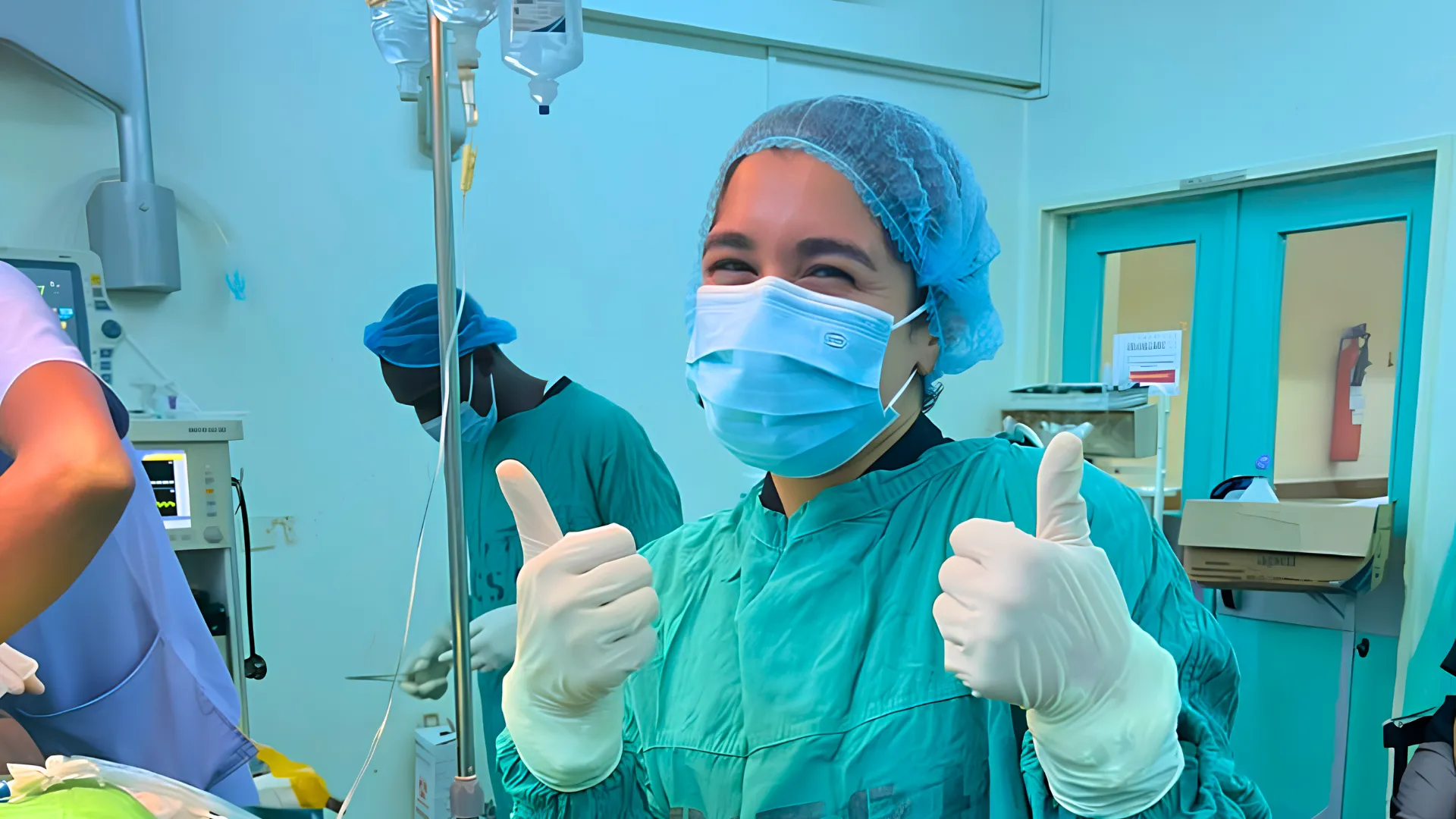
Your hospital placement is matched to your interests. On the nursing track, you might spend time in:
- General medical and surgical wards, watching nurses carry out admissions, medication rounds, wound care, and discharges.
- Casualty and triage, where nurses decide in minutes who needs care first.
- Maternity and newborn care, if you are drawn to maternal health.
- Pediatrics, where families stay close to the bedside.
- Community health, including school health talks and outreach clinics.
If you are undecided between nursing and midwifery, you can ask for a mixed schedule that combines general wards with the maternity unit.
Alongside the wards, you join the weekly global health tutorials, where local clinicians explain the ethical and practical challenges behind what you have seen, and Swahili lessons twice a week.
What you will not be allowed to do
As a pre-nursing intern, you are not a student nurse, and your scope reflects that. You observe, ask questions and help with basic, non-technical tasks, such as preparing supplies, guiding patients, or keeping a patient company. You do not give medication, take blood, insert cannulas or carry out any procedure that requires clinical training, wherever you are in the world. Qualified nurses and midwives supervise you at all times, and our in-country coordinator checks in regularly.
Be wary of any program that promises more. Doing tasks you are not trained for puts patients at risk and can harm a future nursing application rather than help it.
How it supports a nursing school application
Nursing schools want to see that applicants understand the profession they are choosing. A pre-nursing internship gives you:
- Real material for your personal statement. You can describe specific patients and nurses, and explain what you learned from them.
- A professional reference from the placement.
- A certificate of completion after at least 50 to 60 supervised hours, with a log of your hospital time.
- Evidence of adaptability from working in an unfamiliar health system and culture.
Whether hours abroad count toward a program's healthcare experience requirement varies by school, so check with the admissions office of each program you plan to apply to before you travel.
How long should a pre-nursing internship be?
We recommend at least three weeks. That gives you time to settle in, move between two or three departments, and see a ward through busy days and quiet ones. Four weeks is even better, and it can be a good opportunity to compare nursing and another specialty, say, midwifery.
How to choose a pre-nursing program
Ask every provider these questions:
- Will a qualified nurse supervise me at all times?
- Has the hospital agreed in writing what pre-nursing interns may and may not do?
- Can I choose my departments, or switch between nursing and midwifery?
- Will I receive a certificate, a log of my hours and a reference?
- Where will I live, and who is responsible for me outside the hospital?
- How are the host hospital and the nurses who mentor me rewarded for hosting me?
For a longer list of questions, see our guide to whether shadowing abroad is worth it.
Costs
You can compare destinations and lengths on our pricing page. The US$350 deposit that reserves your place is the hospital placement fee. The program fee covers your mentor, shared accommodation with meals, airport transfers, daily transport to the hospital, tutorials, Swahili lessons and in-country support. Flights, visas, insurance and optional excursions are paid separately.
Kellsie Quinn, from Montana State University, summed up her placement simply: "Elective Africa was a great experience that aided in my learning for my future career." Nursing students who join us later in their training say the same. Jake Prested, from the University of York, called it "the standout moment of my entire nursing program," adding that "no other part of my training has been as engaging, as challenging, as educational or as enjoyable."
Ready to take the next step? Explore our pre-nursing and pre-midwifery internships. If you are already in a nursing program, our nursing elective placement guide is the better fit.
FAQ
Can pre-nursing students do internships abroad? Yes. Pre-nursing internships are designed for people aged 18 or over who have not yet started a nursing program. You observe registered nurses and help with basic, non-clinical tasks under supervision.
What can I do on a nursing internship without a nursing license? You can observe, ask questions and help with simple tasks such as preparing supplies or guiding patients. You cannot give medication, take blood or perform any clinical procedure.
Do hours abroad count for nursing school? It depends on the school. Some programs count supervised healthcare experience abroad and others do not, so check with each admissions office before you travel.
What is the minimum age for a pre-nursing internship? You must be at least 18 years old when your placement starts.
How long should a pre-nursing internship be? We recommend at least three weeks, so you have time to experience two or three departments and understand the work.